
Tire care that earns the full mileage
Tires are the most expensive wear part on a car, and the one people ignore until they are bald. I see sets rated for 50,000 miles come in finished at 35,000, worn down one edge. Nobody moved them around or kept air in them. The upkeep takes a few minutes and costs nothing, and it buys back thousands of miles you already paid for.
Rotation evens out the wear
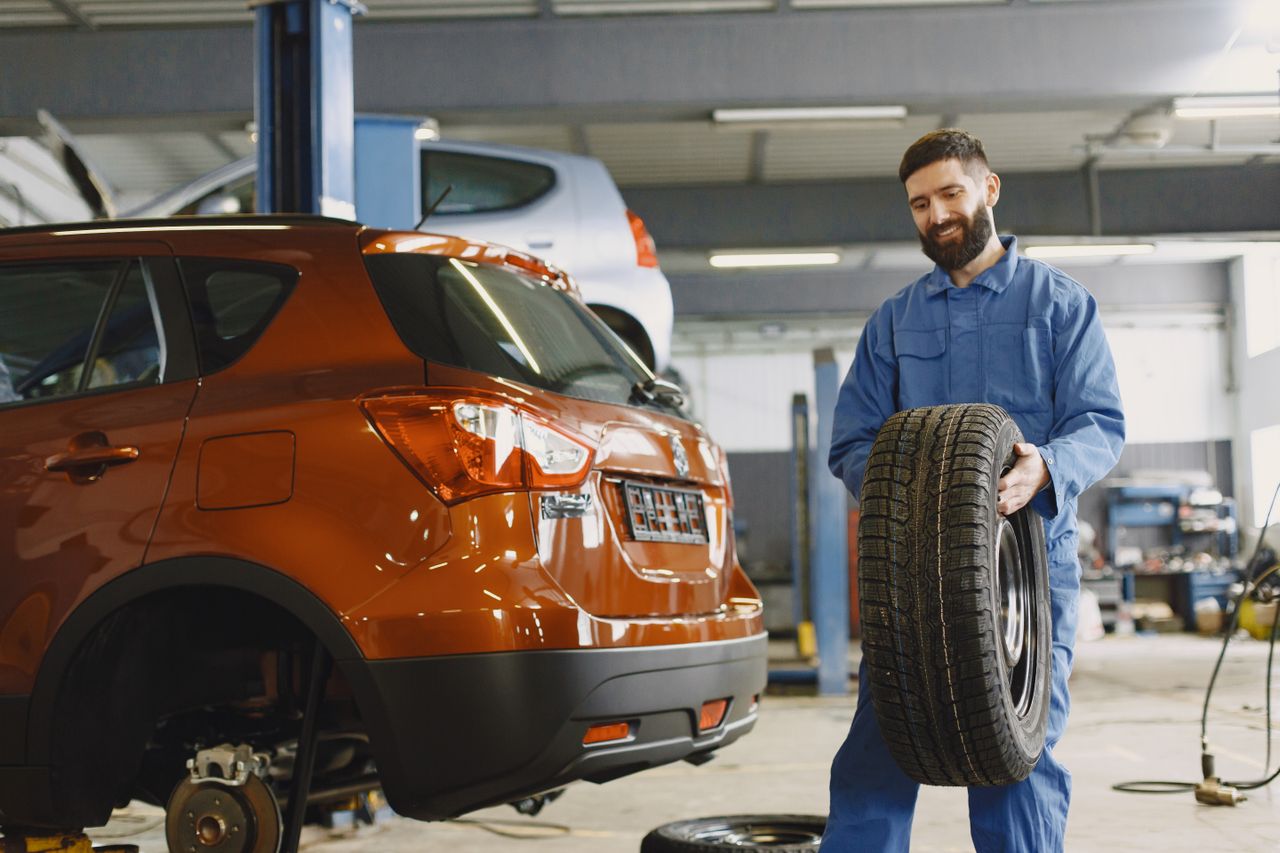
Front and rear tires wear at different rates, and on a front-drive car, the fronts take the brunt of steering and braking. A tire rotation schedule moves them around the car so the wear spreads across all four. We rotate at every oil change, near every 5,000-7,500 miles for most drivers, and that one habit can add a year to a set. Directional tires and staggered fitments change the pattern, so check the sidewall arrows before crossing any tire side to side.
Low pressure causes the most damage
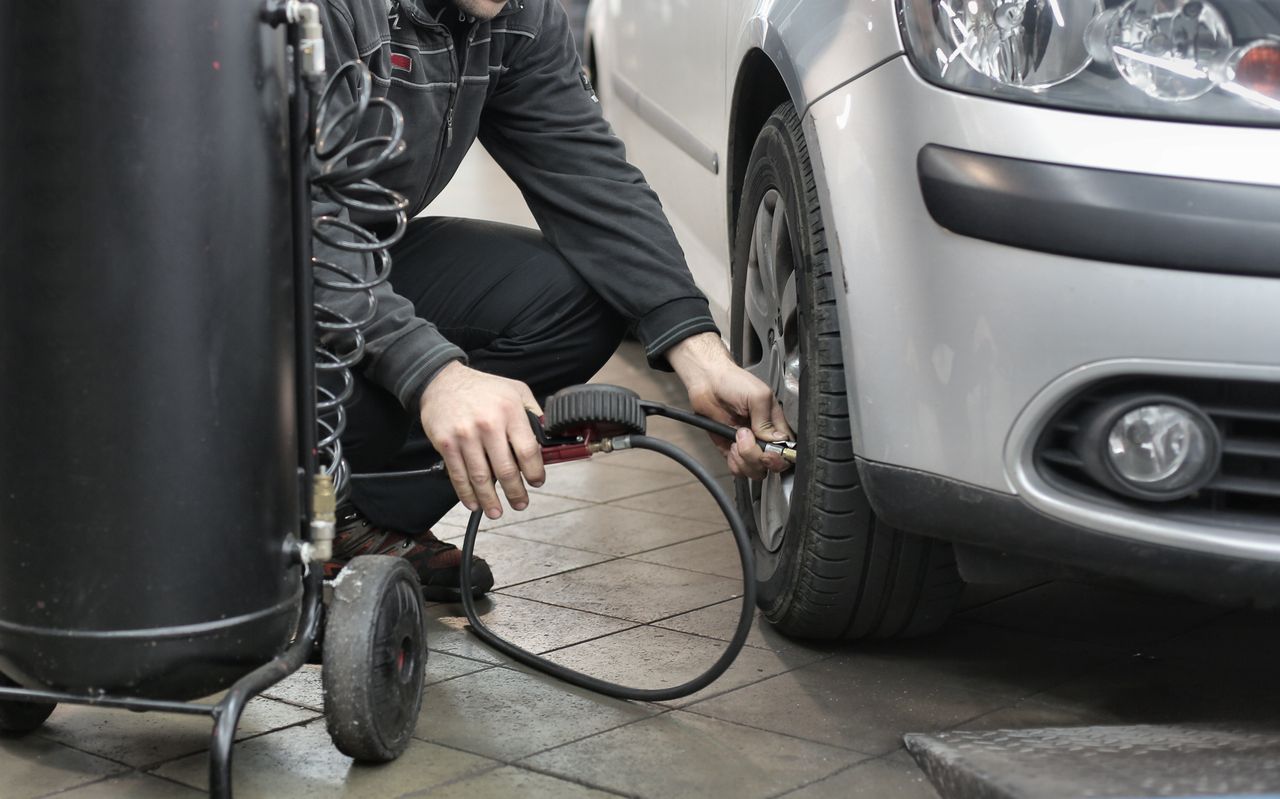
An underinflated tire wears its outer edges and builds heat that shortens its life, and it drains fuel economy the whole time. A monthly tire pressure check catches it before the damage sets in. Use the pressure on the driver’s door jamb, since that is what the carmaker set for your car. The pressure molded into the sidewall is only a ceiling. Check them cold, before you have driven, because a warm tire reads a few pounds high. A TPMS sensor will not warn you until a tire is a quarter low, well past the point where the wear has set in.
Balancing and alignment, the vibration fixes
Vibration in the wheel at 50-60 miles per hour points to a wheel out of balance. One lost weight, or an unevenly settled tire throws it off. Balancing re-centers the spin and clears it.
A car that pulls to one side or wears one tire edge needs a wheel alignment. The potholes that open across Vermont every spring knock alignments out by the dozen. Left alone, a bad alignment can ruin a new tire in a few thousand miles.
The point where a tire is done
Drivers ask when to replace tires, and the law and the weather give different answers. Vermont fails a tire at 2/32 of an inch, the depth where the tread wear indicator bars meet the surface. That depth is the legal floor. Winter grip wants closer to 4/32, since a worn tire on packed snow needs far more room to stop. Age counts as much as tread. Rubber hardens and cracks past six years regardless of mileage, so check the date code on the sidewall. A quarter beats a penny for a quick tread check, since the coin reaches deeper than 2/32 before the head disappears.
A quarter beats a penny for a quick tread check, since the coin reaches deeper than 2/32 before the head disappears.
Read the wear, read the problem
Both edges down with a smooth center means chronic underinflation.
A worn center with good edges is the opposite, too much air.
One edge feathered to a sharp ramp points to a bent tie rod or a lost alignment.
Cups or scallops around the tread come from a dead shock or a wheel left out of balance too long.
We flip a tire on the rack and read it before we ever quote a cause.
Seasonal sets and storage
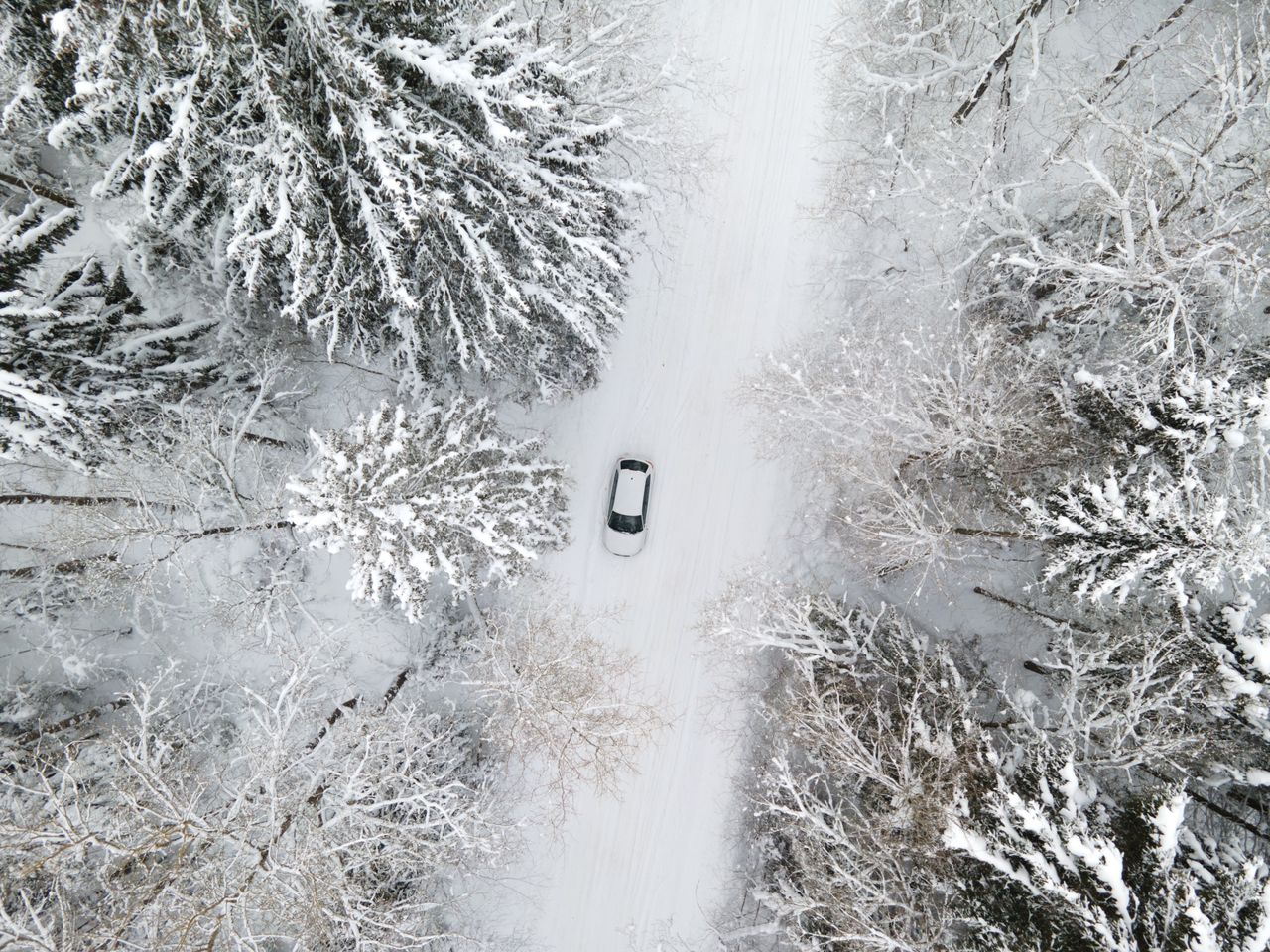
All-season tires cover three of our four seasons and give up grip in deep winter. A second set on its own rims makes the twice-yearly swap quick. Snow tires Vermont drivers keep on rims save a remount every season. Store the off-season set stacked flat or hung, out of the sun. Mark which corner each tire came off, so the next rotation goes back in order. A second set of rims means the TPMS sensors have to be relearned to the car, a quick step most driveway swaps skip.
All of it is simpler and cheaper than a new tire. Rotate on a schedule and check the pressure cold once a month. Fix the alignment the week the car shows up. A set treated that way returns every mile it was built for, and a few you were not counting on.