How often should a Vermont driver change the oil?
Drivers searching how often change oil find a dozen conflicting answers online. Most arrive at our counter expecting the old 3,000-mile rule, the one that fit the engines of thirty years ago. The cars we service now travel further between changes. A Bennington winter and our dirt roads still pull the interval back from what a flatland garage would post.
The interval depends on the oil in the pan
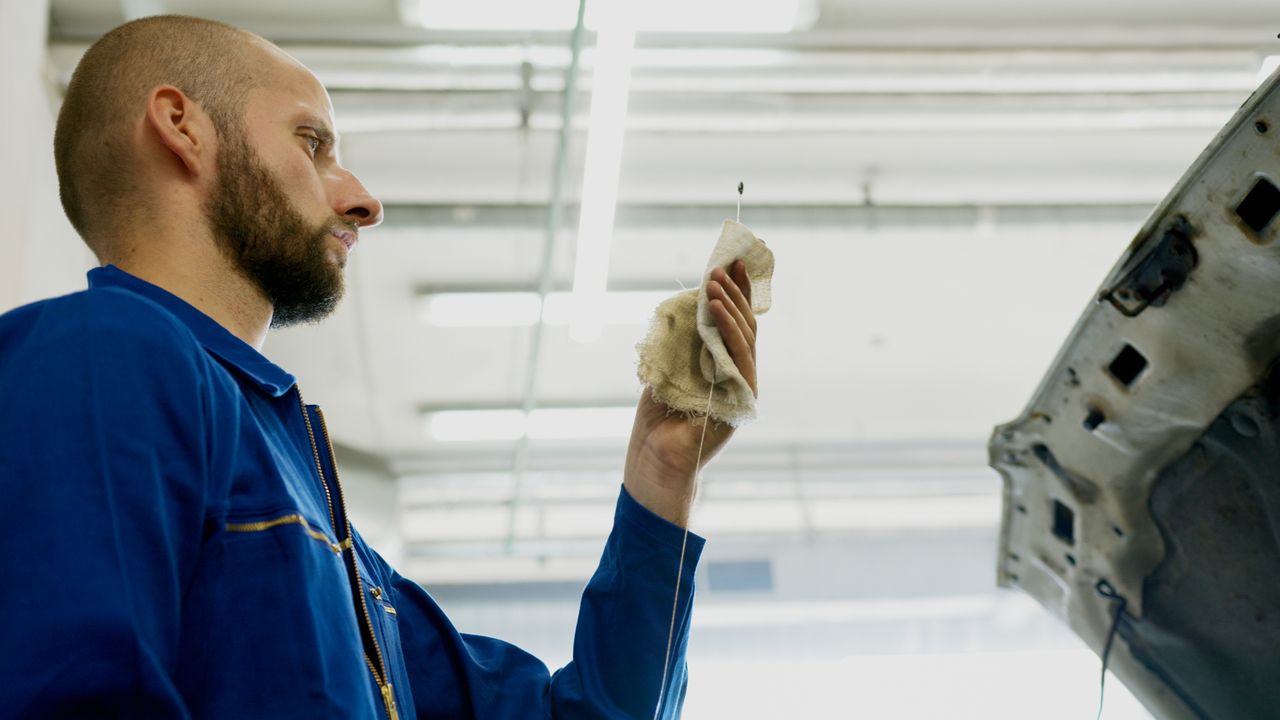
Oil change interval comes down to what you pour in, more than the calendar on the wall. We keep three grades on the shelf, and they don’t all last the same.
Conventional.
3,000-5,000 miles between changes.
Synthetic blend.
5,000-7,500 miles on a half-synthetic mix.
Full synthetic.
7,500-10,000 miles, more in some engines.
High-mileage.
5,000-7,500 miles, for engines past 75,000.
Full synthetic oil goes in most cars now, and the reason favors the customer. One synthetic service covers the ground of two conventional changes. A driver makes half the trips to the bay and spends about the same amount across the year. Synthetic oil change frequency suits the way people here drive, in short cold bursts that are hard on cheap oil.
What tired oil looks like
Tired oil tells on itself the moment we pull the drain plug. Fresh oil is honey-colored and thin. A neglected conventional fill at 8,000 miles pours out the color of strong coffee. It thickens toward sludge after that and bakes a varnish onto the valvetrain that we scrub off by hand. The bills we hate to write come from skipped changes. We have opened engines two years past service, where the oil had cooked into a crust around the camshaft. A $4,000 teardown followed a string of $70 changes the owner skipped to save money.
Why Vermont shortens it
The factory schedule splits into normal and severe service, and almost every car in Bennington qualifies as severe. Severe driving conditions sound dramatic for a trip to the grocery store. The term covers the conditions that wear oil out. Short trips that never warm the engine and dirt-road dust both qualify. Most of a Vermont winter is exactly that.
A minus-10 morning thickens the oil, and the first turn of the key is the hardest moment in an engine’s week. Cold weather oil viscosity sets how soon that oil reaches the top of the engine. A few dry seconds up there do more harm than a hundred highway miles. Thin synthetic climbs to the top in a second. A heavy conventional grade stays in the pan, thick and slow, while the cam scrapes.
A few dry seconds up there do more harm than a hundred highway miles. Thin synthetic climbs to the top in a second. A heavy conventional grade stays in the pan, thick and slow, while the cam scrapes.
Short trips and worn-out oil
The five-minute hop to work is rougher on oil than a long highway haul, which catches people off guard. An engine needs ten or fifteen minutes to reach full temperature. That is the point where it burns off the fuel and water vapor that slip past the rings into the oil. A driver who never tops fifteen minutes leaves that moisture to turn the oil acidic. We trim the interval for the in-town commuters who stay inside Bennington. Idling in the driveway to warm up will not clear it, since the engine has to be under load to drive the moisture out.
Let the car tell you
Two things beat any blanket rule. The owner’s manual recommendation lists the mileage and grade the engineers built the engine around, and it wins over any quick-lube upsell. Newer cars carry an oil life monitor. It watches how hard the engine has worked and counts down a percent based on how the car gets driven. We tell most customers to take the manual’s mileage and trim a thousand off it for our winters.
A skipped change also voids the powertrain warranty on a newer car, since the manufacturer wants proof of service at the listed mileage. The savings from stretching the interval vanish the first time a dealer denies a claim.
Your honest interval lives in the glovebox, trimmed for the cold we get here. Bring the manual to the counter and tell us how short your daily drive is. We will set a schedule that matches your engine instead of a billboard.