Why washing your car protects more than its looks
Drivers treat the car wash as a luxury, something for a sunny Saturday. The benefits of regular car wash visits are mechanical before they are cosmetic. A state that salts its roads five months a year turns washing into the cheapest rust control money will buy. Nobody notices the rust until something structural gives way, long after the cheap wash could have stopped it.
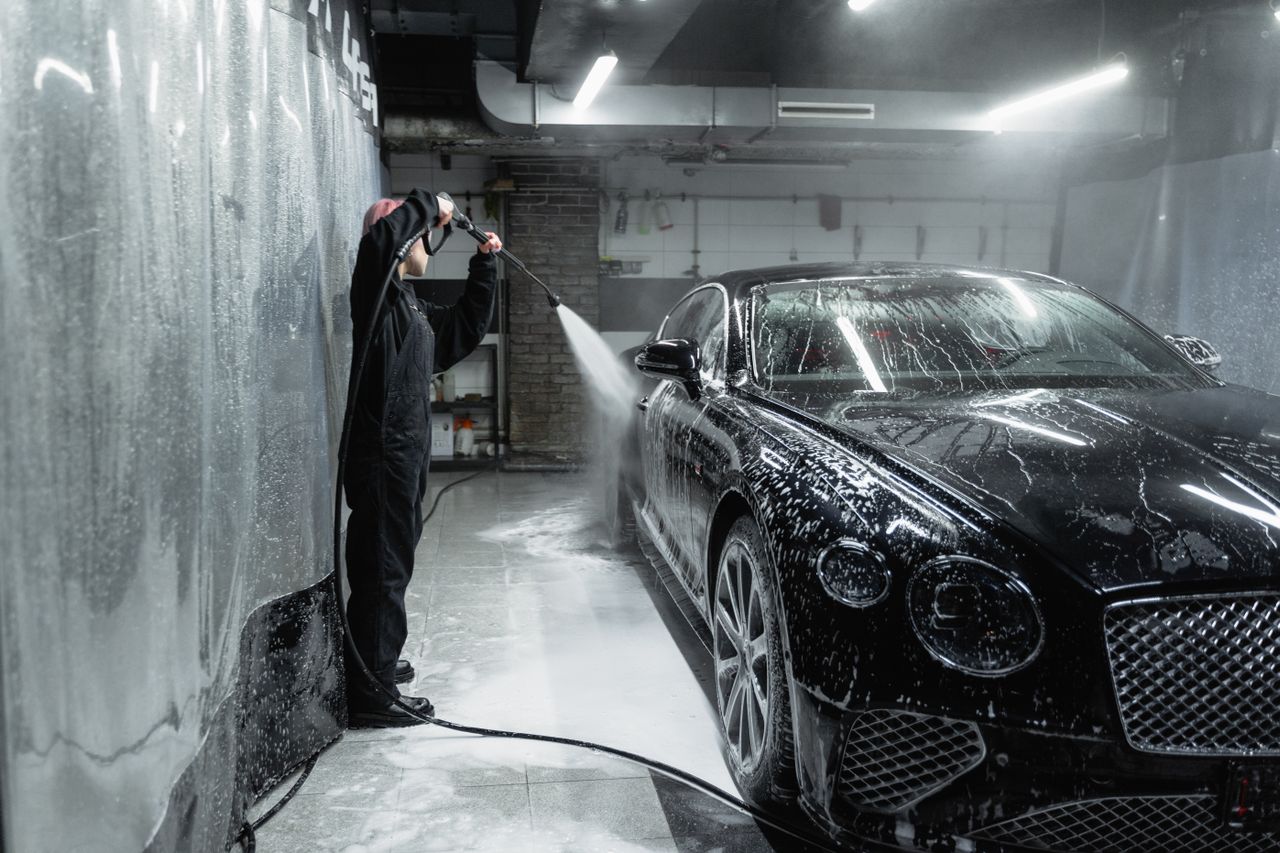
The right pace tracks the season.
Salt months call for once a week, underbody included.
In the warm half of the year, you can stretch to every two or three weeks.
Bird droppings and tree sap are the exception, since both eat into the clear coat within days and should come off the same week.
Grit and salt go after the paint first
Modern car paint has several layers. The color rides under a clear coat, a thin sealed film that takes the abuse from sun and road salt. Drivers ask how a car wash protects paint, and the answer is the top film. Washing strips the road grime before it etches through. Salt and brake dust trap moisture against the surface and grind on it on every drive. Lose the clear coat protection, and the color underneath oxidizes and peels, which no wax can bring back. A black or red car left unwashed through two Vermont winters dulls to a chalky finish. Only a machine polish brings that partway back.

The damage you cannot see
The underside takes the worst of it and shows the least. Road salt car damage takes hold on the brake lines and the frame, where brine settles into seams and stays wet for months. An undercarriage wash reaches that zone, and most drivers skip it because the dirt is out of sight. The automatic bay here sprays the underbody on every pass through, which buys more rust prevention than any product sold over the counter. A rusted-through brake line is both a repair and an automatic inspection failure. It turns up far more on cars that never see a wash.
The automatic bay here sprays the underbody on every pass through, which buys more rust prevention than any product sold over the counter. A rusted-through brake line is both a repair and an automatic inspection failure. It turns up far more on cars that never see a wash.
Salt rides inside too

Grime never stops at the paint. Salt tracks in on boots and collects in the carpet. The moisture it holds wicks down into the floor pan and corrodes it from the cabin side. Our Tornado vacuums in the bay pull it out of the seams before it settles. Five minutes with the wand each month spares a floor pan that costs thousands to cut out and weld. The drain holes along the bottom of each door clog with grit and back up, which rusts the door from the inside out.
A sealant adds a second barrier
Clean paint still wants something on top. A wax sealant gives salt a slick surface to slide off instead of biting into the finish. The spray we add at the end of a wash buys a few weeks. Paste wax holds a couple of months if you put in the work. Skip it, and the grime sticks harder between washes.
The spray we add at the end of a wash buys a few weeks. Paste wax holds a couple of months if you put in the work. Skip it, and the grime sticks harder between washes.
The driveway wash leaves most of it behind
A garden hose and a sponge sound thrifty. The sponge drags grit across the paint and leaves the swirl marks you catch under a parking-lot light. A garden hose never reaches the underbody where the salt collects. Proper washing floods the panels first to float the grit loose, and washes top down with clean media. The bay here makes both passes and reaches the parts a driveway never will.
It shows up at resale
A buyer reads a car’s history off its body. Faded paint and surface rust at the rocker panels tell them it was neglected, and they knock serious money off the offer. Two identical trucks, one washed through its life and one left salted, can differ in resale value by a thousand dollars or more. The wash habit costs a fraction of that.
Washing is the cheapest maintenance on a car, and the only kind that pays you back when you sell. A subscription covers unlimited trips through the bay, underbody included, for less than a tank of gas a month. Skip it for one winter and the salt will take the body from beneath while the engine stays sound.